
Internationally recognized for its quality, LUBRAN has attracted growing attention in recent years with its upward trajectory. We spoke with Murat Deligöz, Chairman of the Board, to learn more about the company’s achievements, international growth and future goals.
First of all, could you tell us about LUBRAN’s founding story, its current production capabilities and its position in the automotive lubricants industry?
Operating under the umbrella of Künde Petrol Ürünleri, LUBRAN is a growing Turkish brand established with the aim of offering high-quality, reliable lubricant products capable of competing in international markets. Since our establishment, we have focused not only on increasing our production volume but also on simultaneously improving our product quality, technological infrastructure, extensive product range and export capabilities.
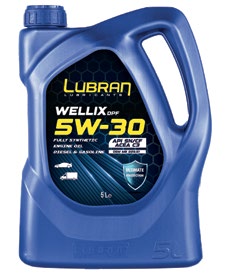
Today, under the LUBRAN brand, we offer a comprehensive product portfolio ranging from passenger car motor oils and heavy-duty diesel engine oils to transmission and gear oils, hydraulic oils, greases, antifreeze products and automotive chemicals.
One of the greatest advantages of our production structure is our ability to respond quickly to the requirements and technical specifications of different markets. We manufacture products for both the domestic and export markets in a variety of viscosity grades, performance levels and packaging formats.
At this stage in our development, we position LUBRAN not merely as a lubricant brand operating in Türkiye, but as a brand that brings Türkiye’s manufacturing strength to international markets and aims to grow on a global scale.
Which countries and regions do LUBRAN’s export operations currently cover? Which markets are you particularly targeting for growth in the coming period?
Exports are one of the fundamental pillars of LUBRAN’s growth strategy. Today, our products reach more than 50 countries. We operate actively across a variety of regions—particularly the Middle East, Africa, Central Asia and the Balkans—and continue to expand our export network through new distributor partnerships.
We recognize that every market has its own dynamics. Climatic conditions, the composition of the vehicle fleet, consumer habits, packaging preferences and required API and ACEA performance levels can vary from one country to another. For this reason, rather than applying a standardized export sales model, we analyze the needs of each target market and develop our products and business models accordingly.
Looking ahead, we see significant growth potential in Africa, the Middle East, Central Asia and the Americas. At the same time, our priorities in the markets where we are already present include not only increasing sales volumes but also strengthening brand awareness by establishing robust and sustainable distributor networks.
Our goal extends beyond exporting to new countries: we aim to establish LUBRAN as a lasting and trusted brand in every market in which we operate.
How important are international standards and quality certifications for LUBRAN’s international growth?
We do not regard OEM approvals merely as marketing tools; we view them as independent confirmation that our products perform in accordance with international standards.
When entering a new country or starting to work with a new distributor, technical documentation, product performance and compliance with international standards play a decisive role in establishing brand credibility. Our investments in laboratory facilities, product development and quality infrastructure therefore directly support our export growth.
In addition to your distributor network, you offer private-label production solutions to international customers. Could you describe your capabilities in this field and the advantages you provide to your business partners?
Private-label production is an important part of our international operations. Thanks to our manufacturing infrastructure, we can produce a range of product groups and packaging formats under our customers’ own brands.
Our approach involves much more than simply placing a customer’s logo on the packaging. We can manage the entire process together with our customers—from identifying the requirements of the target market and selecting the appropriate product category and performance level to choosing packaging alternatives and preparing technical documentation.
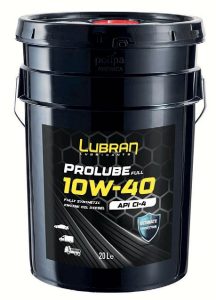
In addition to retail packaging starting from one liter, we offer 20-litre containers, drums and higher-volume solutions for industrial applications. This allows us to develop different production models for brands seeking to enter the retail market, as well as for fleet operators, service centers and industrial customers.
Through our flexible manufacturing structure, extensive product portfolio and export experience, we aim to accelerate the market-entry process for our private-label customers.
Our fundamental objective is not merely to serve as a manufacturer, but to become a long-term production and solutions partner that enables our customers to achieve sustainable growth in their own markets.

How are the increasing adoption of electric and hybrid vehicles, stricter emissions regulations and growing sustainability expectations transforming the lubricant industry? What investments and product-development activities are LUBRAN undertaking in response to this transformation?
The automotive industry is undergoing a rapid technological transformation, and this is having a direct impact on the lubricant sector. Alongside the growing adoption of electric and hybrid vehicles, stricter emissions limits, longer oil-change intervals, fuel-efficiency targets and new engine technologies are changing the performance expected of lubricants.
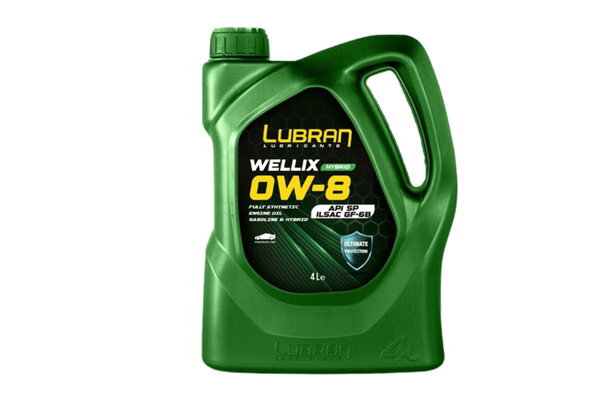
We believe that demand for low-viscosity motor oils will continue to increase in the coming years. We are therefore expanding our product-development activities and portfolio in next-generation viscosity grades such as 0W-8, 0W-16, 0W-20 and 5W-20.
The different operating characteristics of engines in hybrid vehicles are causing new requirements. In electric vehicles, meanwhile, thermal management, transmission fluids and other specialized fluid technologies are gaining importance in place of conventional motor oils. These developments are generating new areas of expertise within our industry.
From a sustainability perspective, we believe that attention must be paid not only to vehicle emissions but also to the entire life cycle of the product. Technologies that deliver higher performance, help extend equipment life and contribute to energy efficiency are becoming increasingly important.
At LUBRAN, we do not interpret this transformation as a contraction of the conventional lubricant market. Instead, we see it as the industry’s evolution towards more technologically advanced, higher-value-added products.
We are therefore shaping our product-development activities around next-generation engine technologies, low-viscosity lubricants, evolving OEM requirements and the mobility solutions of the future. As we continue to expand our export network, which already reaches more than 50 countries, our goal is also to establish LUBRAN as a strong and competitive brand in the products that will be required by the automotive technologies of tomorrow.