
Over the past decade, the automotive industry has redesigned almost every component in the name of digitalisation, from steering wheels to door handles, from instrument panels to climate controls. Large screens, touch surfaces, and a minimalist cockpit approach have strengthened the perception of technology. However, alongside technological advancement, users still seek traditional structures in increasingly digitalised vehicles.
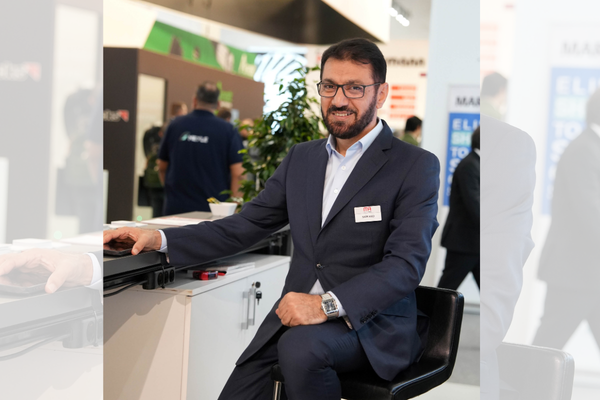
Drawing attention to the fact that manufacturers have had to revert to many traditional elements under the pressure of usage habits and safety regulations, Saim Aşçı, Chairman of ITO Committee 52 and CEO of Motor Aşin, stated:
“The user still wants to experience the sound of the internal combustion engine, the mechanical nature of conventional vehicles, and the nostalgic combination of buttons and similar elements. However, at the point we have reached today, the effects of this transformation on safety and user behaviour have begun to be discussed again. Digitalisation, which was initially merely a topic of debate, has evolved into a different dimension that directly concerns safety.”
In addition to electrification on a global scale, the automotive industry has also become a focal point due to certain problems brought about by digitalisation. Most recently, accidents resulting in fatalities in certain regions—particularly in the Far East—due to the failure of retractable door handles to open have brought about a different approach. This has revealed the necessity of recording such issues within legal regulations and accreditation frameworks. While preparations for restrictions on yoke-type steering wheels, flush exterior door handles, and excessively digitalised interior equipment have come to the agenda in China, in Europe Euro NCAP has announced that offering essential functions without physical controls will reduce safety scores (Euro NCAP Roadmap 2026, 2024). Touchscreens require travelling 70 metres without control Making significant observations on the subject, Motor Aşin CEO Saim Aşçı stated:
“In response, countries have begun to take precautions. Indeed, in vehicles where digitalisation is highly intensive, many issues arise that further distract human attention and divert it from the road. This concern is not limited to touchscreens; in-vehicle entertainment systems and internet access that opens to the outside world through connectivity are also unsettling in terms of driving safety. Research reveals that the use of touchscreens while driving significantly increases distraction. According to NHTSA data, operations performed via the in-vehicle screen cause drivers to take their attention off the road for an average of 2 to 3 seconds; at a speed of 90 km/h, this means travelling approximately 70 metres without control. The same studies indicate that touchscreen-based controls increase the risk of making errors while driving by 20 to 25 percent compared to physical buttons (NHTSA Driver Distraction Report, 2022). At a time when we discuss that even 3–4 metres are critically important in braking distance tests, the point we have reached is remarkable.”
The majority of consumers want physical buttons in cars On the consumer habits side, a similar trend is observed. According to user experience studies conducted by J.D. Power in the United States and Europe, 68 percent of new vehicle users state that they prefer physical buttons for basic functions such as climate control, audio systems, and window defogging. These data clearly demonstrate that the sector’s technology-oriented designs do not align with practicality and safety expectations for a broad user base. Aşçı says,
“The message from the regulatory front is clear: design freedom cannot take precedence over safety. In Euro NCAP’s post-2026 evaluation criteria, the absence of physical accessibility for functions such as turn signals, hazard flashers, window defogging, and climate control will be considered direct grounds for point deduction (Euro NCAP Roadmap 2026, 2024). This means that the same vehicle may receive four stars instead of five solely because of its cockpit interface. Companies manufacturing for the European market will therefore have to revise their existing platforms.”
The cost of redesign ranges between 200 and 400 dollars Providing clarification from a product and supply chain perspective as well, Saim Aşçı stated:
“Over the past five years, the number of mechanical buttons inside vehicles has decreased by an average of 40 percent, while the number of functions managed by a single screen has approximately tripled. Now, a reverse trend is emerging. Manufacturers will have to shift back to physical switch groups, mechanical climate panels, and real buttons on steering wheels. This means new mould investments, new supplier agreements, and part revisions on existing vehicle platforms. In the medium term, this transformation is projected to increase OEM costs by 200 to 400 dollars per vehicle (Boston Consulting Group Automotive Electronics Outlook).”
A single screen failure costs 15,000–25,000 TL, while replacing a physical button/switch costs 500–1,500 TL On the after-sales services and spare parts side, the picture is even more striking. While the average repair cost of a single screen failure in touchscreen-based multimedia systems ranges between 15,000 and 25,000 TL, replacing a physical button or switch group often falls within the 500 to 1,500 TL range. Insurance companies and fleet firms define high-cost screen damages as a risk factor in terms of claim frequency. The return of physical controls creates a more modular, lower-cost, and inventory-management-wise more predictable structure in the after-sales market. Stating that
“Technology is valuable as long as it makes the driver’s life easier,” Aşçı continued: “If it diverts the driver’s eyes from the road, prolongs reaction time, and increases service costs, it ceases to be comfort and turns into a systematic risk factor.”