
Neko Otomotiv (Neko Automotive) is a leading supplier with over 750 thousand product variety exporting to 45 countries We learned the details of Neko Automotive’s success story from Mr. Necati Kosova, general manager of the company for our readers.
Can you provide information about your export activities? In which countries do you have a stronger market share?
Export is one of the most strategic pillars of Neko Automotive’s growth story. With more than 27 years of export experience, Neko Automotive serves 45 countries and operates across Europe, the Balkans, Scandinavia, the Turkic Republics, the Americas, Asia, and Africa with 235 brands and over 750,000 product varieties. This picture shows that the company has built a flexible export model that can adapt to different market dynamics rather than focusing on a single region. In terms of market strength, it can be said that the company has particularly strong penetration in Europe and surrounding regions.
Behind this lies both Turkey’s production and logistics advantages, as well as Neko Automotive’s wide product range, fast delivery capability, and multi-brand structure. One of the most important criteria for customers in the automotive aftermarket is the ability to access the required parts quickly and reliably; the continuity Neko provides in exports forms 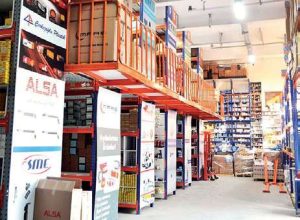 the foundation of this trust. Additionally, being listed among the “Export Champions” in 2023 indicates that its export performance stands out not only quantitatively but also qualitatively. This achievement demonstrates the company’s steadily increasing competitiveness in the global market.
The automotive aftermarket industry is highly competitive. What are the key features that differentiate Neko Automotive from its competitors?
I believe the main factor that differentiates Neko Automotive from its competitors is that it approaches the business not merely as “product sales,” but as end-to-end supply and service management. Today, the companies that make a difference in the automotive aftermarket are those that can deliver the right product, at the right time, with the right technical support. Neko Automotive’s extensive brand and product depth, same-day shipment capability, widespread sales organization, and digital ordering infrastructure provide a significant competitive advantage in this regard. The company’s own B4B system, offering access to over 750,000 references along with fast product search, easy ordering, reporting, and a user experience-focused structure, directly addresses the critical needs for speed and accuracy in today’s spare parts trade.
In addition, acting as a distributor of international brands in Turkey and expanding the NETEX brand to 2,400 sales points nationwide positions Neko not only as a distributor but also as a market developer. Another distinguishing aspect is the company’s vision of going beyond traditional spare parts trading to include equipment, consumables, and technological/consultancy services. Moreover, the after-sales services provided on the service products side—installation, training, technical support, and maintenance processes—offer long-term value to customers and position Neko Automotive not just as a supplier but as a solution partner. This approach strongly meets customers’ expectations for one-stop solutions, especially within the service ecosystem.

How has the recent technological transformation in the automotive sector (electric vehicles, digital manufacturing, etc.) affected your company?
What kind of work are you doing in this area? Today, the automotive sector is experiencing one of the biggest transformation periods in its history. Electric vehicles, connected systems, advancements in diagnostic technologies, data-driven service management, and digital supply chain practices have become the core agenda of the industry. In such a period, companies operating in the automotive aftermarket ecosystem need to stand out not only with product diversity but also with their ability to adapt to technology. At Neko Automotive, we see this transformation not as a threat but as a significant area of development.
This approach is reflected in the company’s B4B infrastructure, technical equipment distributorships, and service model. On the digitalization side, our own B4B system enables our customers to access products faster, manage order processes more efficiently, and perform reporting. In the spare parts sector, digitalization does not simply mean e-commerce; it means reaching the correct reference, reducing error rates, shortening supply times, and improving customer experience. Neko B4B’s structure—focused on “instant product search,” “easy ordering,” “reporting,” and “user experience”—is a concrete response to this transformation. On the other hand, our distributorships in service equipment and testing devices provide a significant advantage in adapting to the sector’s technical transformation.
With the increasing number of electrical and electronic systems in next-generation vehicles, it is clear that service providers need more advanced diagnostic, measurement, and equipment infrastructure. At this point, Neko Automotive goes beyond product supply by making a difference with the after-sales services it offers for service equipment. This structure, which includes installation, user training, technical service support, and maintenance services, enables customers to quickly and smoothly adapt to new-generation technologies. Thus, Neko offers its customers not only parts but also a sustainable service infrastructure and solution ecosystem.
How do you evaluate the position of Turkey’s automotive supplier industry in the global market? What are your predictions for the future of the sector?
Turkey’s automotive supplier industry has a strong advantage in the global market thanks to its production capability, engineering infrastructure, flexible manufacturing structure, and geographical location. Especially its proximity to Europe, fast logistics opportunities, and broad supply ecosystem make Turkey a strategic hub not only in production but also in aftermarket services and spare parts supply. Companies like Neko Automotive, with their multi-brand structure, export focus, and fast logistics infrastructure, are among the concrete representatives of this strength in the field. In the coming period, the most decisive topics for the sector will be electrification, digitalization, data-driven supply chain management, and sustainability. As the vehicle fleet transforms, spare parts and service needs will also evolve; this will make product knowledge, technical expertise, and technology investment even more valuable.
Therefore, in the future, companies that stand out will not only be those with a wide product stock but also those that manage the right data, provide technical solutions to customers, and build strong digital infrastructures. I view the future of Turkey’s automotive supplier industry positively. Especially in a period when flexibility in global supply chains is increasingly important, I believe Turkey will become even stronger with companies that can balance speed, quality, and accessibility.
Competition in the future of the sector will be shaped not only by price but also by speed, trust, technology, sustainability, and customer experience. Therefore, Turkey has a significant window of opportunity ahead; the companies that will seize it are those investing today in digitalization, quality systems, and export capabilities.