
The stagnant trend observed in the automotive aftermarket in 2024 continued throughout 2025, with the sector showing a flat performance in sales, exports, and employment during the final quarter of the year. Despite economic challenges, industry representatives maintain a cautious yet stable outlook for 2026.
According to the 2025 Year-End Sectoral Evaluation Survey conducted by the Automotive Aftermarket Products and Services Association, domestic sales in the last quarter of 2025 declined by an average of 3.94% in dollar terms compared to the same period in 2024.
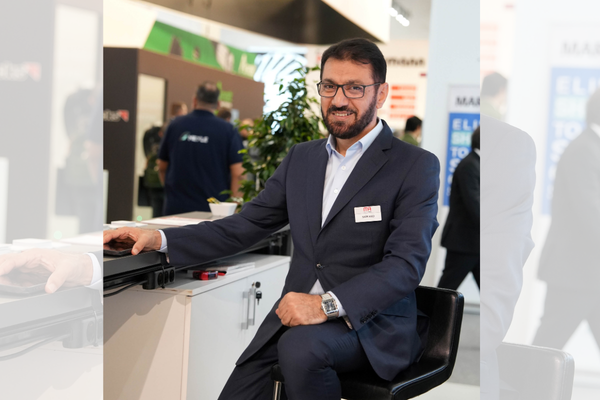
Commenting on the survey results, Ali Özçete, Chairman of the association, stated that 2025 was a year in which global and local economic conditions significantly impacted the automotive aftermarket. However, he emphasized that the sector succeeded in maintaining production, employment, and operational continuity despite these pressures.
Domestic Sales Decline While Distributor Sales Grow
The survey revealed that the automotive aftermarket experienced a noticeable decline in sales during the final quarter of 2025. Compared to the same quarter in 2024, domestic sales fell by an average of 3.94% in dollar terms.
During the same period:
-
Distributor members recorded a 1.71% increase in sales
-
Manufacturer members experienced a 9.87% decline in sales
Collection Process Challenges Continue
The survey also evaluated expectations for the first quarter of 2026. According to the findings, domestic sales are expected to increase slightly by 0.5% in dollar terms.
Meanwhile, collection performance showed a decline. The collection rate, which stood at 45.1% in 2024, fell to 43.5% in 2025. While 13.8% of members reported improvements, 42.5% stated that collection processes had deteriorated.
One in Three Companies Increased Employment
Despite market pressures, employment levels remained relatively stable across the sector.
According to the survey:
-
31.3% of companies increased employment in 2025
-
37.5% maintained their workforce
-
31.3% reported a decline in employment
Employment levels increased among manufacturer members, while 29.3% of distributor members reported a reduction in staff.
Biggest Challenge: Rising Costs
One of the most striking findings of the survey was the list of challenges faced by the sector in 2025.
The most frequently cited issue was “excessive increases in costs,” reported by 81.3% of members.
Other major challenges included:
-
Cash flow problems – 66.3%
-
Loss of business and revenue – 52.5%
-
Logistics costs and delivery problems – 43.8%
-
Customs-related issues – 23.8%
-
Employment-related problems – 21.3%
-
Regulatory changes – 15%
Investment Appetite Declines Among Manufacturers
The survey also analyzed investment plans across the sector. According to the results, 23.7% of companies plan to make new investments within the next three months.
However, investment appetite among manufacturers declined:
-
Manufacturer investment plans fell from 33.3% to 25.6%
-
Distributor investment plans increased from 10.3% to 22%
At the same time, expectations for a negative market outlook decreased among both groups.
Production Increased but Exports Fell
In 2025, the average capacity utilization rate among manufacturers stood at 72.56%, down from 78.15% in 2024.
During the final quarter of 2025:
-
Production increased by 2.56%
-
Exports declined by 4.23% in dollar terms
Aftermarket Sector Maintains Resilience
Evaluating the results, OSS Chairman Ali Özçete stated that despite temporary financial pressures, the sector maintained its operational strength.
“Despite the impact of global and local economic conditions, 2025 stood out as a year in which the automotive aftermarket successfully preserved production, employment, and operational continuity,” Özçete said.
He added that the sector demonstrated strong financial resilience throughout the year, describing 2025 as a “financial confidence and resilience test” that the aftermarket industry successfully passed.
Rising Labor Costs Create New Pressure
According to Özçete, the dynamics of the automotive aftermarket are changing significantly. The relative stabilization of foreign exchange rates over the past two years has kept spare parts price increases below inflation.
However, labor-related costs — including personnel, rent, and operating expenses — have risen far above inflation levels, creating additional pressure across the sector.
For the first time, labor costs have surpassed spare parts costs, directly affecting both service providers and consumers.
Vehicle Fleet Age Supports Spare Parts Demand
Despite cost pressures, the long-term outlook for the aftermarket remains positive. The high average age of the vehicle fleet in Türkiye continues to sustain strong demand for maintenance, repair, and spare parts.
Additionally, record-breaking vehicle sales in recent years are expanding the customer base of the aftermarket.
A large portion of the 1.2 million vehicles sold in 2024 will go out of warranty in 2026, which is expected to further increase demand for servicing and spare parts.
Aftermarket Remains Backbone of Automotive Exports
Özçete also emphasized the importance of the aftermarket sector for Türkiye’s automotive exports.
According to the data, automotive supply industry exports increased by 6% in 2025, reaching $15.77 billion, accounting for 38% of total automotive exports.
Demand growth in European Union markets, particularly in Germany and France, continues to support the sector’s competitiveness.
This outlook is considered one of the key pillars supporting the sustainable growth of Türkiye’s automotive aftermarket in 2026.